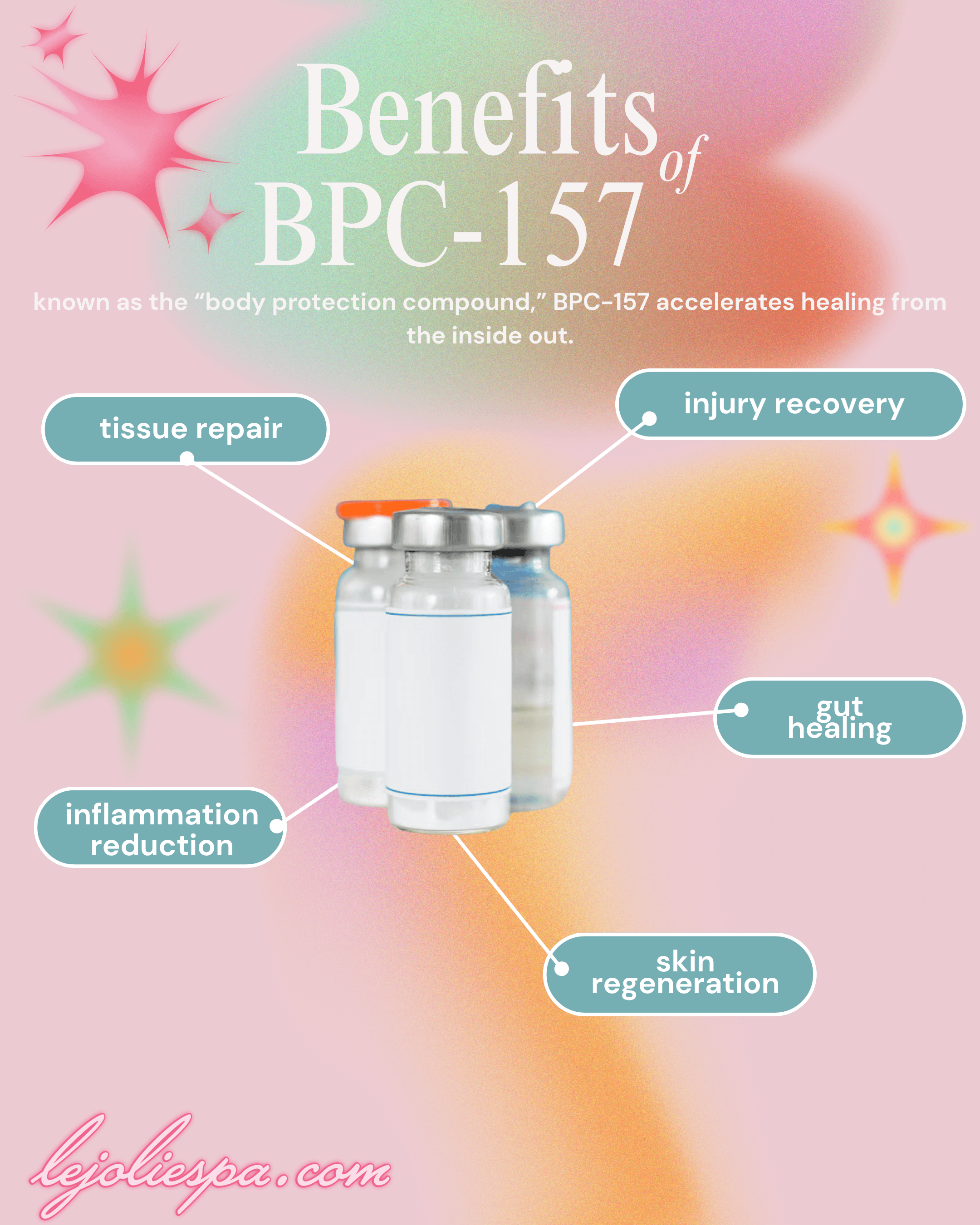
Although some research has been done on BPC-157, the data can only be considered preliminary
The GLOW Blend's comprehensive effects on skin biology make it a valuable research tool for investigating dermal regeneration, photoaging mechanisms, and the molecular basis of age-related skin changes. Chronologically aged skin exhibits characteristic features including reduced collagen density (declining 1.0-1.5% annually from early adulthood), decreased fibroblast activity, compromised barrier function, and diminished regenerative capacity, with research demonstrating that collapsed senescent fibroblasts produce low collagen while generating high levels of matrix metalloproteinases that degrade existing ECM. The GLOW Blend addresses these multifaceted aging processes through coordinated mechanisms: GHK-Cu resets aged gene expression patterns to match younger profiles while stimulating fibroblast synthetic activity, BPC-157 enhances cellular migration and proliferation essential for tissue renewal, and TB-500 restores cytoskeletal dynamics that enable efficient cellular responses to regenerative signals. Laboratory investigations demonstrate that GHK-Cu application significantly increases skin thickness, improves hydration, and stimulates collagen synthesis in experimental tissue models, with 70% of subjects showing improved collagen production compared to 50% with vitamin C and 40% with retinoic acid in controlled studies

What the Research Does NOT Yet Support - There are currently no published randomised controlled trials (RCTs) in humans for BPC-157 - Human pharmacokinetic data (how it is absorbed, distributed, metabolised, and excreted) is limited - Optimal dosing, route of administration, and treatment duration have not been established clinically - Long-term safety data in humans is absent - Regulatory approval from the TGA, FDA, or EMA has not been granted for any therapeutic indication TB-500: Evidence Overview What the Research Supports TB-500 / Thymosin Beta-4 has somewhat more human-facing research, though still predominantly preclinical: Phase I and II clinical trials have investigated Thymosin Beta-4 (the native peptide) in cardiac repair following myocardial infarction, with promising safety profiles Wound healing applications have been explored in clinical settings, particularly for chronic non-healing wounds and dry eye disease Robust animal evidence supports its role in reducing inflammation, supporting angiogenesis, and promoting tissue regeneration The native peptide (T4) has demonstrated cardioprotective effects in animal models of heart failure and ischaemia What the Research Does NOT Yet Support TB-500 is a synthetic fragment of T4 it is not identical to the native peptide, and extrapolating human clinical data from T4 studies directly to TB-500 may not be valid No approved therapeutic indications exist for TB-500 specifically Comparative efficacy versus established treatments has not been studied The long-term effects of exogenous peptide administration on endogenous thymosin beta-4 regulation are unknown Potential Benefits: A Summary Based on the available (predominantly preclinical) literature, the following potential benefits have been identified: Risks & Safety Considerations Known & Reported Side Effects Because large-scale human trials are lacking, our understanding of the side effect profile is limited
Digital forms within digital intake systems can auto-populate diagnosis codes and calculate billable units where applicable
Saris WH, Schrijver J, van Erp Baart MA, Brouns F
This method ensures that your body receives the full benefits of the nutrients without loss due to digestion